Working from home gives employees the freedom to organise their day, avoid commuting and fit work more easily around their personal lives. But what feels like a benefit to one employee can become a challenge for another.
When work happens at home, many of the spontaneous interactions that come naturally in an office disappear — quick conversations with colleagues, shared breaks or simply the feeling of being part of a team.
That does not mean remote work is bad for mental health. It does mean that staying connected should not be left to chance.
According to the World Health Organization, around one in six people worldwide experiences loneliness. WHO says loneliness and social isolation can negatively affect both mental and physical health.
For remote workers, the challenge is finding a balance that allows them to enjoy the flexibility of working from home without becoming socially isolated.
1. Understand the Difference Between Being Alone and Feeling Lonely
Working alone does not automatically mean feeling lonely.
Some people work better in a quiet environment without office noise and constant interruptions. The problem arises when a lack of contact with other people starts affecting someone's mood, motivation or sense of belonging.
The World Health Organization distinguishes social isolation from loneliness. Social isolation refers to having too few social connections, while loneliness is the personal feeling that the relationships or connections you have do not meet your needs.
The important question is not simply how much time you spend alone, but how that time makes you feel.
2. Don't Let Every Conversation Become About Work
When you work remotely, it is easy for every interaction with a colleague to start and end with a task or deadline.
But people do not build relationships through formal meetings alone.
A short conversation before a meeting, a message about something unrelated to work or an occasional virtual coffee can make the working day feel much less isolated.
Try this: Make some room for informal conversations without expecting every interaction to have a specific business purpose.
3. Don't Turn Every Free Slot Into Another Video Call
More communication does not necessarily mean better communication.
If your working day is already filled with meetings, adding more calls can simply create another source of fatigue.
Sometimes a short one-to-one conversation is enough. In other situations, a message or phone call may be all you need.
Try this: Choose the communication method based on what you actually need. Use meetings when collaboration is necessary and shorter forms of communication when you simply want to stay connected.

4. Take Breaks and Get Out of the House
One of the challenges of working from home is that the entire working day can take place in the same space.
A short walk, getting a coffee or having lunch somewhere outside the house can create a useful break between work and the rest of the day.
If your job allows it, you can also occasionally change where you work. A coworking space, library or café can provide a change of scenery and more opportunities for casual interaction.
Not every working day has to look the same.
5. Build Relationships Outside Work
Colleagues should not be your only source of social contact.
Friends, family, sports, hobbies and local activities can all contribute to a stronger sense of connection.
This can be particularly important for people working in international teams, where colleagues may live in different countries and time zones and where relationships are often limited to working hours.
The WHO includes maintaining relationships and taking part in community activities among the ways people can strengthen social connections.
6. Create a Clear Boundary Between Work and Personal Time
Flexibility is one of the biggest advantages of remote work, but it can become a problem when the working day has no clear ending.
Without leaving an office, it is easy to keep working: one more email, one more task or just a few more minutes at the computer can gradually extend the workday.
Creating your own end-of-work routine can help.
It could be as simple as closing your laptop, turning off work notifications or going for a short walk after finishing work.
The goal is to give your brain a clear signal that the working day is over.
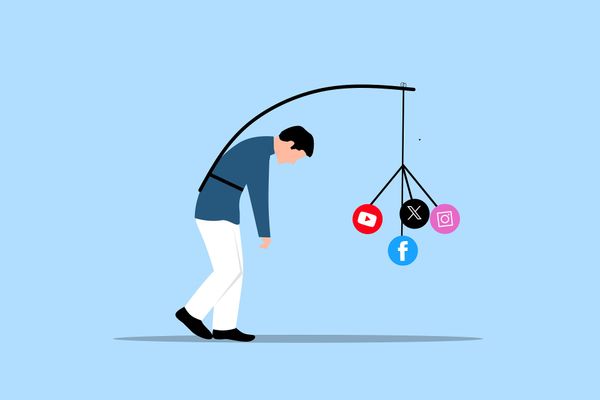
7. Talk to Your Manager When You Need More Support
Employees may sometimes hesitate to say that they feel isolated because they do not want to give the impression that remote work is not working for them.
But managers cannot always recognise this through messages, emails and online meetings.
Regular one-to-one conversations can therefore be useful for more than discussing tasks. They can also give employees an opportunity to talk about communication, workload and their connection with the team.
If you need more contact with colleagues, it is reasonable to say so.
8. Employers Have a Role to Play Too
Mental health and social connection should not be the employee's responsibility alone.
Companies that employ remote workers can help by establishing clear communication practices, scheduling regular one-to-one conversations and creating opportunities for informal interaction.
That does not mean every team needs a virtual happy hour or mandatory social event.
What matters more is that employees know who they can turn to, have regular contact with their manager and do not feel that they have to solve every problem on their own.
What Does the Research Say About Remote Work and Loneliness?
Research does not provide a simple answer to whether remote work is good or bad for mental health.
A 2026 study published in the Journal of Affective Disorders analysed data from 87,317 employed adults in the United States. Researchers found that people who worked remotely three to four days a week had higher odds of reporting greater loneliness. The same significant association was not found among people working remotely one to two days a week.
Another 2026 study published in Science, which analysed data from more than 588,000 US workers, found that the increase in remote work was associated with more time spent alone and worsening in some measures of mental health. The effects were particularly pronounced among people who lived alone.
These findings do not mean everyone working remotely should return to the office. They suggest that how remote work is organised, and how much social interaction employees have, can matter for their wellbeing.
How to Find a Remote Job That Works for You
Not every remote job is organised in the same way.
Some companies operate almost entirely asynchronously, while others have daily meetings and frequent communication between team members. Some offer significant flexibility, while others expect employees to be available during specific hours.
So when looking for a remote position, it is worth looking beyond the job title and salary. Consider asking:
- How does the team communicate?
- How often are meetings held?
- Are regular one-to-one conversations part of the job?
- What are the expected working hours?
- How flexible is the schedule?
- Does the company organise activities or meetups for remote employees?
At Online.jobs, you can search for remote positions by field and skills and find opportunities that match your experience and preferred way of working.
Remote work does not have to mean working in isolation. With good routines, clear boundaries and enough opportunities for real human connection, it is possible to enjoy the flexibility of remote work without losing the sense of belonging that comes from being part of a team and a wider community.
Sources
- World Health Organization — Social connection and loneliness: https://www.who.int/news-room/questions-and-answers/item/social-connection
- World Health Organization — Social connection linked to improved health and reduced risk of early death: https://www.who.int/news/item/30-06-2025-social-connection-linked-to-improved-heath-and-reduced-risk-of-early-death
- PubMed — 2026 study on remote work and loneliness: https://pubmed.ncbi.nlm.nih.gov/41093174/
- Science — 2026 study on remote work, time spent alone and mental health: https://doi.org/10.1126/science.aec7671
- Pacific Assistance for Community Health — Maintaining connection and mental health while working from home: https://pacmh.org/maintaining-connection-and-mental-health-while-working-from-home/