A candidate applies for a remote job.
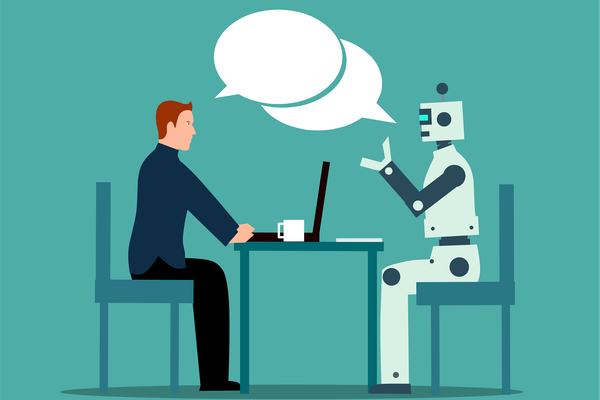
Instead of meeting a recruiter, they meet an AI interviewer.
The system asks questions, records answers, follows up when needed, and produces a transcript for the hiring team. A recruiter watches the recording later, reviews the answers, and decides who moves forward.
For an employer, the appeal is obvious.
One AI interviewer can conduct the same first-stage interview with dozens or hundreds of candidates without asking recruiters to spend hours on introductory calls.
But there is another question that is harder to answer:
What do you lose when the interviewer is no longer a person?
AI interviews are becoming a real part of recruitment. A 2026 study involving 70,000 job applicants compared interviews conducted by human recruiters with interviews conducted by AI voice agents. In both cases, human recruiters made the hiring decisions. Candidates interviewed by AI were 12% more likely to receive a job offer, while the researchers found that AI interviews produced more consistent and structured information.
That does not mean AI is a better interviewer.
It suggests something more useful: AI may be good at collecting information, while humans may still be better placed to decide what that information means.
So what should employers actually do?
What Does an AI Interview Mean?
The term can describe several very different things.
An employer might use AI simply to schedule interviews or transcribe a conversation. That is very different from an AI system conducting the interview itself.
In a fully AI-led interview, the candidate may speak to a voice or video system that asks predetermined questions, responds to answers, and records the conversation.
The hiring team then receives a transcript, summary, or assessment.
There is also a middle ground.
A recruiter can conduct the interview while AI handles transcription, summarizes the conversation, or highlights information for later review.
These models should not be treated as the same thing.
The more responsibility the system has for evaluating the candidate, the more important the questions around accuracy, transparency, and human oversight become.
Why Would an Employer Let AI Conduct an Interview?
The strongest argument is not that AI is cheaper than a recruiter.
It is that AI can make the first stage of hiring more consistent.
A human recruiter may ask slightly different questions from one candidate to another. They may spend more time with one person because they find the conversation interesting. Another candidate may get less attention because the recruiter has already formed an impression.
That is normal human behavior.
It is also one reason structured interviews exist.
AI can make it easier to ask the same core questions, collect comparable answers and process large numbers of interviews.
Research from the Institute of Student Employers shows that employers are already using automation more heavily for structured assessments, while activities involving direct human interaction remain overwhelmingly human-led. The research found that traditional interviews, group tasks, role plays and case studies were still 94% to 100% fully human in the organisations surveyed.
That tells us something important.
Employers are not necessarily trying to replace human interaction everywhere.
They are more comfortable automating parts of hiring where the criteria are easier to define.
What AI Can Do Well
For a high-volume remote position, the first interview can be repetitive.
A recruiter may ask the same questions dozens of times:
Why are you interested in the role?
Tell me about your previous experience.
What hours can you work?
What is your experience with this type of software?
When could you start?
AI can handle much of that initial information gathering.
It can also create a transcript, which means a recruiter does not have to rely entirely on handwritten notes.
For employers hiring internationally, there can be another advantage: consistency.
Every candidate can receive the same basic opportunity to answer the same questions.
That can make comparisons easier.
But consistency is not the same as accuracy.
And that is where the human interviewer becomes difficult to replace.
What Happens When a Candidate Gives an Unexpected Answer?
Imagine a candidate answers a question in a way that does not fit the expected pattern.
A human interviewer might stop.
They might ask:
“What do you mean by that?”
Or:
“Can you give me an example?”
Or even:
“That sounds different from what you mentioned earlier. Can you explain?”
A good interviewer is not simply following a list of questions.
They are listening for something worth exploring.
An AI system can also ask follow-up questions, but the quality of those follow-ups depends on how the system has been designed and what information it is allowed to use.
Real interviews are messy.
Candidates pause.
They change their minds.
They remember something halfway through an answer.
They ask questions of their own.
Sometimes the most useful part of an interview is the answer nobody planned for.
The Problem With Treating Every Pause as Information
This is not just a theoretical concern.
A recent EURES article described problems reported by a jobseeker during an AI interview, including interruptions, incorrect transcripts, and a system moving on after a short pause as if the candidate had finished speaking.
That matters because human communication contains information that is difficult to reduce to a clean transcript.
A pause does not necessarily mean uncertainty.
A short answer does not necessarily mean a lack of knowledge.
An accent does not mean poor communication.
And a nervous candidate is not necessarily a poor candidate.
If an AI system misunderstands those signals, the employer may end up measuring how well someone performs in front of the technology rather than how well they would perform in the job.
Should Employers Watch the Video Later Instead?
This is probably the most tempting model.
Let AI conduct the interview.
Record everything.
Then have an HR professional watch the best candidates later.
On paper, it sounds like the best of both worlds.
The recruiter saves time because they do not have to attend every interview. The employer still has a human making the final decision.
But there is a risk.
Human oversight only works if the human actually reviews the evidence critically.
If a recruiter simply accepts an AI-generated score or summary because there are too many interviews to watch, the human may technically be involved while the system is effectively making the decision.
Research published by the European Union on human oversight in AI-supported hiring found that human reviewers can still follow discriminatory AI recommendations. Human involvement by itself does not guarantee a fair outcome.
That is an important warning for employers.
Putting a person at the end of an automated process does not automatically make the process human.
So Is a Human Interview Still Better?
For some parts of hiring, yes.
A human interviewer can notice context.
They can change the direction of the conversation.
They can explain the job.
They can answer questions about the team.
They can notice when a candidate misunderstood a question and give them another chance.
Most importantly, they can have a conversation.
That matters because interviews are not only about employers evaluating candidates.
Candidates are evaluating employers, too.
If a talented person spends 20 minutes talking to an AI and never gets an opportunity to speak with anyone from the company, what does that tell them about the workplace?
The answer will not be the same for every candidate.
Some people may prefer an automated first interview because it is convenient and predictable.
Others may see it as another barrier between themselves and a real person.
The employer needs to consider both.
What About Bias?
AI is sometimes presented as a way to remove human bias from interviews.
That claim deserves caution.
AI does not start with a blank slate.
It is built, trained, or configured using data, criteria, and decisions created by people.
If those inputs contain problems, automation can reproduce them at scale.
The EU’s AI Act treats certain AI systems used for recruitment and selection as high-risk because of the potential impact on people’s access to employment. The framework includes requirements around human oversight and transparency.
The practical lesson for an employer is simple:
Do not assume that a numerical score is more objective just because a machine produced it.
Ask what the system is actually measuring.
And ask whether that measurement has a meaningful connection to the job.
What Should Employers Actually Measure?
This may be the most important question of all.
Before introducing an AI interviewer, hiring teams should decide what they want the interview to tell them.
For example:
- Can the candidate explain their previous work clearly?
- Do they understand the responsibilities of the role?
- Can they solve relevant problems?
- Can they communicate with clients or colleagues?
- Do they understand the tools they claim to use?
- Can they describe how they approach unfamiliar situations?
- Are their expectations compatible with the role?
Once those criteria are clear, the employer can decide whether AI, a human, or both should handle each part.
The interview is only one part of the decision. Reference checks can provide another perspective on how a candidate actually performed in previous roles.
The technology should follow the hiring objective.
Not the other way around.
The Hybrid Model May Make More Sense
For many remote employers, the strongest approach may not be choosing between AI and humans.
It may be using each for a different part of the process.
For example:
Stage 1: Application and screening
AI helps organize applications and identify candidates who meet the basic requirements.
Stage 2: Short AI interview
Candidates answer a small number of structured questions. The purpose is to collect comparable information, not to make the final hiring decision.
Stage 3: Human review
A recruiter reviews the interview information against predefined criteria.
Stage 4: Human interview
The strongest candidates speak with a recruiter or hiring manager.
This conversation can explore areas that an automated interview cannot assess as well: judgment, motivation, problem-solving, communication, and questions about the actual job.
Stage 5: Final decision
The hiring team makes the decision based on the full picture.
This model also gives employers something an AI-only process cannot provide easily: a chance for candidates to meet a real person before they commit to the opportunity.
What If the Candidate Prefers AI?
There is another interesting possibility.
Instead of forcing every candidate into the same format, employers could eventually allow candidates to choose between an AI first interview and a human conversation.
Research into AI interviews has already started examining what candidates’ choice of interviewer might reveal about them.
But employers should be careful here.
Choosing AI should not automatically be interpreted as a personality trait, nor should choosing a human be treated as evidence of anything about a candidate’s ability.
The choice may simply reflect convenience.
Still, giving candidates some control over the process could become part of a better hiring experience.
What Employers Should Tell Candidates
If AI is going to interview someone, the candidate should not have to discover that fact halfway through the conversation.
Tell them before the interview.
Explain:
- that AI will be involved;
- what the AI will do;
- whether the conversation will be recorded;
- whether a person will review it;
- what criteria are being assessed;
- and who will make the final decision.
This is not just about legal compliance.
It is basic communication.
Candidates are much more likely to accept AI when they understand where it fits into the process.
And if an employer is confident in the system, there is little reason to hide it.
When Should a Human Definitely Be Involved?
There are situations where replacing the human conversation with AI makes less sense.
If the role depends heavily on:
- client relationships,
- negotiation,
- leadership,
- empathy,
- complex communication,
- managing conflict,
- or collaboration,
then the employer needs to see how the candidate interacts with people.
An AI interview can provide useful information.
It should not be the only evidence.
The same applies when the candidate’s answer requires context that cannot be captured by a score.
A recruiter should be able to ask, “Tell me more,” and actually listen to the answer.
The Goal Is Not to Remove People From Interviews
The attraction of AI interviews is understandable.
They can save time.
They can create more consistent first-stage interviews.
They can help employers handle large candidate pools.
But the goal of hiring is not to complete as many interviews as possible.
It is to make a good hiring decision.
Those are not the same thing.
A company that replaces every first conversation with an automated system may reduce recruiter workload while creating a worse experience for candidates.
A company that uses AI to handle repetitive information gathering, then gives recruiters more time for meaningful conversations, may get much more value from the same technology.
That is a very different use of AI.
So, AI or Human?
There probably isn’t one answer for every employer.
If a company receives thousands of applications for a role with clear, measurable requirements, an AI-led first interview may make sense.
If the role depends on relationships, judgment, and nuanced communication, a human conversation should probably come much earlier.
For most remote employers, however, the most practical answer may be somewhere between the two.
Let AI collect information. Let humans interpret it.
Use automation where it genuinely saves time.
Keep people involved where context matters.
And never let an impressive AI score become a substitute for understanding the person behind the application.
The question employers should ask is not:
“Can AI interview candidates for us?”
It clearly can.
The better question is:
“Which part of the interview should AI handle, and which part still needs a human?”
That is where the real hiring decision begins.
Ready to hire? Post your job on Online.jobs.
Sources
- European Commission, AI Act Service Desk — Employment. Employment and recruitment under the EU AI Act
- European Commission, AI Act Service Desk — Article 14: Human Oversight. Human oversight requirements
- European Labour Authority / EURES, Jobseekers know your rights in the age of AI hiring, 27 August 2026. EURES: AI hiring and candidate rights
- Institute of Student Employers, How are employers using AI in early careers recruitment? ISE research on AI and recruitment
- Jabarian, B. & Henkel, L., Voice AI in Firms: A Natural Field Experiment on Automated Job Interviews, 2026. Research paper on automated job interviews
- European Union Publications Office, The impact of human oversight on discrimination in AI-supported decision-making. EU research on human oversight in AI-supported hiring