Hiring your first remote employee sounds straightforward.
Post a job. Review applications. Interview the strongest candidates. Make an offer.
Then the practical questions start.
Where can the employee work from? What hours are they expected to be available? Who will manage them? How will they learn the job? What happens if they need help on their first day?
A company that has always hired people who worked in the same office can discover that remote hiring changes more than the location.
It changes how the job is described, how candidates are evaluated, and how the new employee gets started.
The good news is that a first remote hire does not require a completely new company.
It requires a little more planning before the job goes live.
Start by Deciding What “Remote” Actually Means
“Remote” can mean very different things from one company to another.
An employee might work from anywhere in the country, from specific countries, or only within a particular time zone.
They might have completely flexible hours. They might need to be online from 9 a.m. to 5 p.m. Or they might have a few hours of required overlap with the rest of the team.
Before writing the job description, decide:
- Where can the employee legally work?
- Which time zones can you support?
- Are there required working hours?
- How much schedule flexibility is available?
- How often will the employee need to attend meetings?
- Will the company provide equipment?
- How will the employee communicate with the team?
These details are not minor.
A job described as “fully remote” can still be a poor fit for someone who lives six time zones away from the rest of the team.
Your job description should make the practical reality clear.
For example:
Less useful:
“Fully remote with flexible hours.”
More useful:
“Remote within the U.S., with three hours of required overlap with our Eastern Time team.”
The second version gives a candidate something they can actually evaluate.
For more on writing a useful remote job description, see How to Write a Remote Job Description That Attracts Better Candidates.
Decide What the Employee Needs to Succeed
A first-time remote employer can easily focus too much on the hiring part.
But before interviewing anyone, ask a more basic question:
What will this person need once they are hired?
Think about the first few weeks, not just the job posting.
Will they need access to a project management system?
Who will answer questions about clients?
Where will they find company policies?
How will they learn internal processes?
What should they accomplish during their first week?
Remote employees don't have the same opportunity to turn around and ask the person sitting at the next desk. That makes documentation, communication and access to the right people more important.
Microsoft's remote onboarding research has highlighted the need for deliberate communication, early manager conversations, useful documentation, peer support and an initial task that helps a new hire start learning the job.
That principle still matters in 2026: remote onboarding needs to be designed rather than left to chance.
Don't Hire for “Remote” as a Personality Type
First-time remote employers sometimes create an imaginary profile of the perfect remote worker.
They want someone independent, highly organized, communicative, proactive, adaptable and comfortable working alone.
That is a long list.
Some of those qualities may matter for the role. But employers should connect each requirement to actual work.
Instead of asking:
“Is this person a natural remote worker?”
Ask:
“What will this person need to do without someone physically nearby?”
If the employee will manage their own deadlines, independent planning may matter.
If the role involves constant collaboration, communication may matter more.
If the person will work across several time zones, scheduling and written communication may be important.
The job should determine the requirements, not a stereotype about remote workers.
Keep the Interview Focused on the Actual Job
Your first remote hire does not need to pass a test on how well they can work from their kitchen table.
The interview should still focus on whether they can do the work.
Ask candidates about situations that resemble the job.
For example:
“Tell me about a time you had to complete an important task without much supervision.”
Or:
“What do you do when you are blocked and your manager is unavailable?”
Those questions can tell you more than asking whether someone is “self-motivated.”
You can also ask about communication:
“How do you usually keep colleagues informed when you are working independently?”
The goal is not to find candidates who give the most polished answers.
It is to understand how they actually work.
If you use an assessment, make sure it answers a specific hiring question. A remote hiring process should give employers useful evidence without turning the application into unnecessary work for every candidate. For more on that, see How to Build a Remote Hiring Process That Candidates Actually Finish.
Give Candidates a Clear Picture of the Manager
Remote employees can depend heavily on their manager for context that might otherwise be picked up informally in an office.
So candidates should know who will actually manage them.
During the hiring process, explain:
- who their manager will be
- how often they will meet
- how feedback is given
- how priorities are set
- how questions are normally handled
- what the manager expects during the first few weeks
This also gives candidates a chance to decide whether the management style suits them.
Remember: hiring is not only an employer evaluating a candidate.
The candidate is evaluating the company, too.
Prepare Before the Offer Is Accepted
One common mistake is waiting until the employee's first day to start onboarding.
There is no reason to wait.
The basic preparation can begin as soon as the person accepts the offer.
SHRM's June 2026 guidance on the first day of work recommends preparing practical details in advance, including start information, credentials, systems access and a clear agenda.
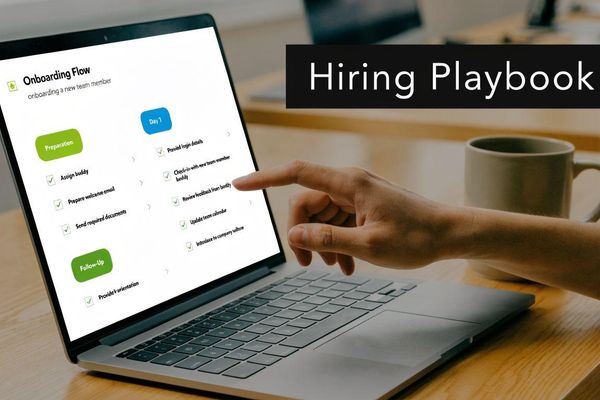
For a remote employee, that preparation might include:
- confirming the start date and working hours
- sending equipment
- creating accounts
- providing access to necessary systems
- sharing basic company information
- sending the first-week schedule
- introducing the manager or onboarding contact
- explaining where questions should go
A new hire should not spend their first morning waiting for someone to create their email account.
Make the First Week About Work, Not Just Information
A remote employee's first week can quickly become a parade of video calls.
Meet the HR team.
Meet the manager.
Meet the department.
Meet the CEO.
Meet the person who manages the software.
By Friday, the new employee may have attended ten meetings and still have no idea what they are supposed to do.
Give them something real to work on.
It does not need to be a major project.
A small first task can help a new employee understand the workflow, tools and standards much faster than another presentation.
The latest SHRM guidance similarly recommends combining first-day information with clear priorities, system access, introductions and a manager check-in rather than treating onboarding as paperwork alone.
The first week should answer three questions:
What am I responsible for?
Who can help me?
What should I do next?
Create One Place for Questions
New employees will have questions.
A lot of them.
The problem is not having questions. The problem is not knowing where to ask them.
Tell the new employee:
- where routine questions belong
- when to message their manager directly
- where company information is stored
- who handles technical problems
- who to contact about HR or payroll questions
- what counts as urgent
For remote employees, this matters even more because there is no physical office routine to fall back on.
A simple instruction such as “If you're unsure, ask in this channel” can remove a surprising amount of hesitation.
Don't Assume Remote Means Alone
A remote employee needs independence.
They also need access to people.
Those are not contradictory.
A good remote setup might include a manager, a teammate who can answer everyday questions, and an onboarding buddy or another informal point of contact.
The goal is not to schedule meetings all day.
It is to make sure the employee knows where to turn when they get stuck.
That distinction matters because remote work can remove many of the small interactions that happen naturally in an office.
Current workplace data also shows that remote work remains a significant part of how remote-capable jobs are organized. Gallup reported in May 2026 that 26% of U.S. employees in remote-capable roles worked exclusively remotely, while another 52% worked in hybrid arrangements.
For employers, that means remote collaboration is no longer an unusual edge case. The systems around communication, management and onboarding need to work in practice.
Check In Before Something Goes Wrong
The first few weeks are not the time to disappear and assume everything is fine.
A short recurring check-in can reveal problems before they become serious.
Ask:
- Is anything unclear?
- Do you have the access you need?
- Is there anything slowing you down?
- Are the priorities clear?
- Do you know who to contact when you need help?
This is also an opportunity for the employer to learn.
Your first remote employee may discover problems that were invisible when everyone worked in the same office.
Maybe a process depends on verbal instructions.
Maybe important information is scattered across several systems.
Maybe nobody knows who owns a particular decision.
Those problems are easier to fix when someone points them out early.
Learn From the First Hire
Your first remote hire will probably expose a few weaknesses.
Maybe nobody knows who approves equipment purchases.
Maybe the documentation is outdated.
Maybe the manager has too many meetings.
Maybe nobody has decided how quickly messages are expected to receive a response.
That's useful information.
Write down what caused confusion during the first few weeks and fix it before hiring the next remote employee.
Over time, the company can turn those lessons into a repeatable process.
The first remote hire does not need a perfect system.
But the company should be willing to improve the system as it learns.
A Simple First-Time Remote Hiring Checklist
Before publishing the job:
- Define where the employee can work.
- Set realistic time-zone and availability requirements.
- Decide what equipment the company provides.
- Identify the manager.
- Define the most important responsibilities.
- Decide what success should look like in the first 30–90 days.
During hiring:
- Explain the remote setup honestly.
- Ask questions tied to the actual work.
- Avoid unnecessary assessments.
- Tell candidates what the hiring process looks like.
- Give candidates a chance to ask about remote working conditions.
Before the first day:
- Create accounts and access.
- Prepare equipment.
- Send the first-week schedule.
- Share useful documentation.
- Introduce the manager and key contacts.
During the first week:
- Give the employee a manageable real task.
- Make expectations clear.
- Schedule focused check-ins.
- Give them somewhere to ask questions.
- Check that they can actually access everything they need.
Your First Remote Hire Sets the Pattern
Hiring remotely for the first time can feel like a technology project.
It isn't.
The technology matters, but the harder part is making sure a new employee knows what is expected, where to find information and who will help when something is unclear.
The strongest first-time remote employers do not try to recreate the office online.
They build a clearer system around the work.
That means defining expectations before hiring, preparing before day one, giving new employees real work quickly and making it easy to ask for help.
Get those basics right, and the next remote hire becomes much easier.